Do I meet the training requirements for the use of lifting platforms?
The first thing you should be clear about is that, if you want to work at height with a lifting machine, whatever it is, you must carry out training. This training will depend on the type of machine you are going to use.
At Liftisa we offer all kinds of training to be able to use the lifting machinery you have in your company. 6 courses 6 certificates.
The training is done in two blocks. A theoretical block that is carried out online, with an approximate duration of between 4 and 6 hours that the user can do from the device of their choice at any time. And a practical block that is done individually and personally, depending on the course that the user wants to take.
Below, we are going to detail the necessary training depending on the type of machine.
MEWP TRAINING Vertical Static
Vertical static MEWP formation. 1st
Type 1 Group A Certificate: Vertical statics.
UNE 58923:2020 Standard.
The projection of the load’s center of gravity is on the inside of the tipping lines.
Translation options are possible if the MEWP is in transport position.
Applicable to the following machines:
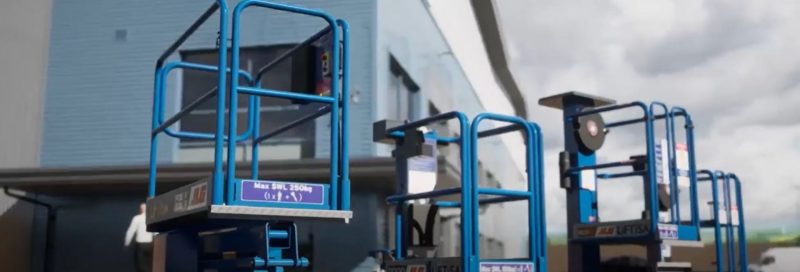
- Mixed tower.
- Single-person mast.
The training explains the following concepts about aerial lifting platforms, composite towers and single-person masts:
- Rules and regulations
- Types of platforms
- Main parts and their functions
- Security Systems
- Pre-use visual inspection
- Safe operating procedures, limitations, risks, and controls.
The online theory class provides the necessary information for the safe use of mixed towers and single-person masts.
MEWP Static Arm TRAINING
Static Arm MEWP Training. 1B
Type 1 Certificate. Group B: Arm statics.
UNE 58923:2020 Standard.
The projection of the load’s center of gravity is on the outside of the tipping lines.
Translation options are possible if the MEWP is in transport position.
Applicable to the following machines:
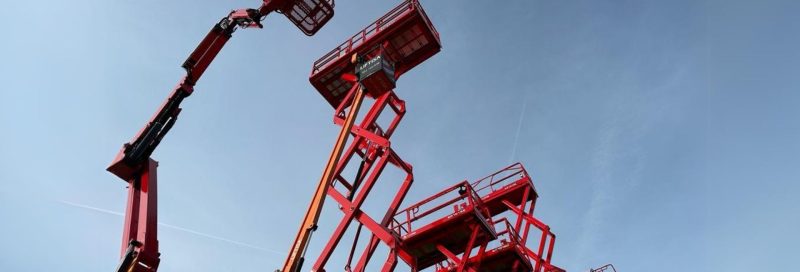
- Articulated on vehicles.
- Telescopic on vehicles.
The training explains the following concepts about articulated aerial or telescopic vehicle-mounted aerial lifts:
-
- Rules and regulations
- Types of platforms
- Main parts and their functions
- Security Systems
- Pre-use visual inspection
- Safe Operating Procedure, Limitations, Risks, and Controls
The theoretical class provides the necessary information for the safe use of articulated or telescopic machines on a vehicle.
Vertical Mobile MEWP Training
Vertical Mobile MEWP Training. 3rd
Type Certificate 3. Group A: Mobile vertical.
UNE 58923:2020 Standard.
The projection of the load’s center of gravity is on the inside of the tipping lines.
The travel options in the raised position are controlled by an organ located on the work platform.
Applicable to the following machines:
-
-
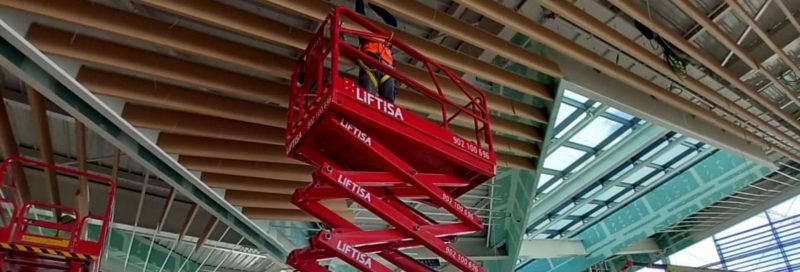
- Mast.
- Scissors.
-
This training explains the following concepts about aerial mast or scissor lift platforms:
-
-
- Rules and regulations
- Types of platforms
- Main parts and their functions
- Security Systems
- Pre-use visual inspection
- Safe Operating Procedure, Limitations, Risks, and Controls
-
The theory class provides the necessary information for the use of mast or scissor aerial platform lifts.
MEWP Mobile Arm Training
PEMP Mobile Arm Training. 3B
Type 3 Certificate. Group B: Arm Mobile
Standard UNE 58923:2020.
The projection of the load’s center of gravity is on the outside of the tipping lines.
The travel options in the raised position are controlled by an organ located on the work platform.
Applicable to the following machines:
-
-
- Telescopic.
- Articulated.
- Mast.
-
The training explains the following concepts about aerial lifts, telescopic platforms, articulated and mast lifts:
-
-
- Rules and regulations
- Types of platforms
- Main parts and their functions
- Security Systems
- Pre-use visual inspection
- Safe Operating Procedure, Limitations, Risks, and Controls
-
The theory class provides the information needed for the safe use of aerial lifts, telescopic platforms, articulated and mast lifts.
SCAFFOLDING FORMATION
Scaffolding
FormationUNE – EN 1004 standard.
Royal Decree – 2177/04.
The following concepts about Scaffolding are explained in the training:
-
-
- Acquire basic knowledge in safety and prevention during the assembly, dismantling or transformation of scaffolding and work at height.
- Know and properly use the means of collective protection, personal protective equipment and the environment.
- Understand the scaffolding’s assembly, dismantling, or transformation plan.
- The safety measures in the event of a change in weather conditions that could negatively affect the safety of the scaffolding.
- The permissible load conditions.
- Successfully apply the legal requirements required within the framework of the Occupational Risk Prevention Law.
- Promote the importance of training workers and the adoption of prevention measures as work habits.
-
The theoretical class provides the necessary information for the safe use and erection of scaffolding.
FORKLIFT TRAINING
Certified in Use and Handling of Forklifts.
According to UNE Standard – 54851:2016.
Aimed at the training of:
-
-
- Reach Truck
- Stackers and tow tractors
- Front Truck
- Telehandler
-
In the training, the following concepts about Forklifts are explained:
-
-
- Rules and regulations
- Types of forklifts
- Main elements and their functions
- Security Systems
- Pre-use visual inspection
-
Safe operating procedures, limitations, risks, and controls.
OUR TRAINING
All our training is developed in three parts: an online theoretical part with tests in questionnaire format to be taken at the end of each topic, a practical, individual and personalized part that is carried out in person and a final written test composed of practical exercises and a skills test session.
The user’s skills will be evaluated using the premises defined to obtain the certificate.
The training is not carried out for a brand of machinery or model exclusively, it covers concepts common to most types of lifting machinery.
This training program focuses on the needs of the end user.
-
-
- We recommend renewing the operator’s certification every five years.
- At the end of the course, and once the theoretical/practical tests have been passed, a Certificate of Aptitude will be awarded. This certificate is valid for working throughout the European Union.
-
This training complies with current legislation on the handling of lifting platforms:
-
-
- Royal Decree 1215/1997
- Law on the Prevention of Occupational Risks 31/1995
- UNE 54851:2016 standard.
- UNE 58923:2020 Standard.
-
All practical training sessions are conducted to complete the theoretical learning course, offering the student the opportunity to demonstrate the skills learned in a safe environment and under the direct observation of our qualified trainers.
BONUS OF OUR TRAINING COURSES
The amount of the courses may be subsidized by the company, in whole or in part, in the Social Security contributions through the TRIPARTITE FOUNDATION.
To do so, you must meet the following conditions:
-
- Royal Decree 395/2007, of 23 March, which regulates the subsystem of Vocational Training for employment.
- Ministerial Order of Labour and Social Affairs 2307/2007 of 27 July, which regulates the financing of Continuous Training Actions in companies, including Individual Training Permits.
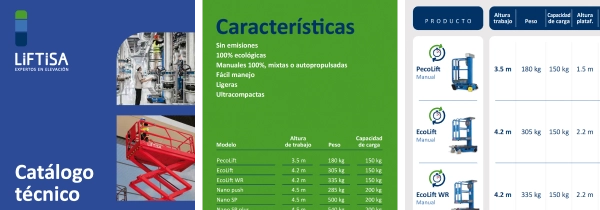
Download our catalog
You’ll be able to view all of our products and current offers, as well as the technical specifications and other services offered by LIFTISA so you have all the information you need for your project.