Should ladders be banned in workplaces?
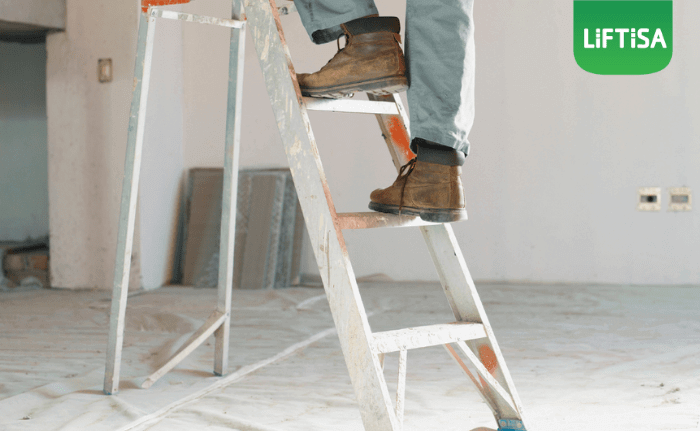
Should ladders be banned in workplaces?
There is currently no ban on ladders in workplaces. According to the Ministry of Labour and Social Economy, the basic rule is not to use a ladder to work. If necessary and whenever it is not possible to use a work platform, a series of measures must be adopted. measures.
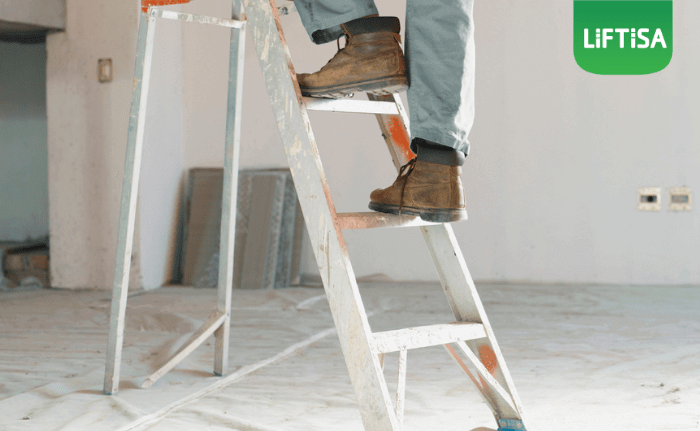
Manual ladders are generally used in all types of industries and jobs, producing a large number of accidents, most of which can be avoided with careful construction, conservation and proper use.
In Construction, falls from height are between 8% and 10% of fatal cases of occupational accidents. The ladders they are one of the most dangerous tools. They cause around 5,000 accidents per year.
In 2020, in the Construction sector, the rate of occupational accidents decreased by 14.9%. The fatal accidents decreased by 18% compared to 2019, with 120 deaths in total. It should be noted that in 2020 the sector was paralyzed for a few months due to the COVID-19 pandemic. If we compare with the data from 2018, the number of deaths increased (+20). In the Industry sector, the rate of occupational accidents in 2020 decreased by 17.9%. However, the fatal accidents grew by 21%, with a total of 108 deaths.
(source: Occupational accident report of the Ministry of Employment and Social Security 2020. Statistics on Accidents at Work. ATR 2020 )
Economic Factor vs. Efficiency.
It is very common for ladders to be used on construction sites. They are an option of Low cost, easy access, practical and effective in the right working environment, providing temporary access to work at height.
On a daily basis, they are perceived as a “tool of the trade“, they require little or no training, there is one of them in every home, and everyone assumes that they know how to use it.
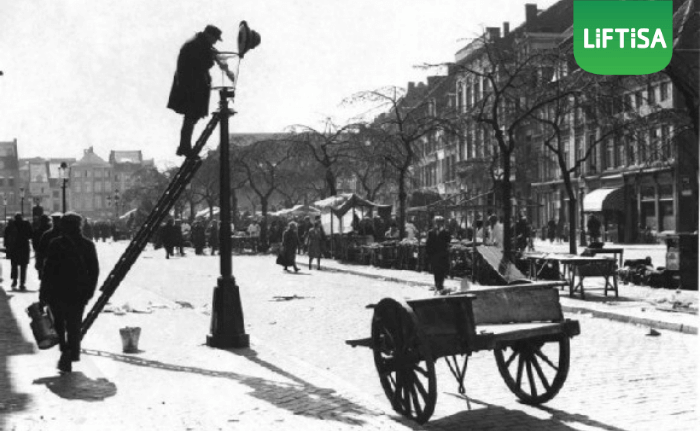
But the issue is less about safety and more about how quickly we can get the job done.
Trying to eliminate stairs based solely on a safety message is not enough. What the market really wants is efficiency, to perform the work optimally in the shortest possible time.
A ladder is a simple and portable system to reach the height you want. And although it is true that over the years the Ladders are becoming more and more complex, with wider bases and platforms at the top, so they are no longer so portable.
The needs of the lifting sector.
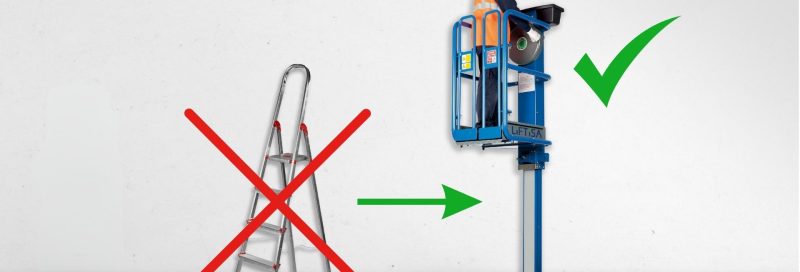
Studies have shown that it is three times faster to work from a lifting platform for work at height than from a staircase. The The lifting platform has no restrictions, both hands can be used to carry out the work, all the tools can be within reach and the risk of falling is reduced.
A report by the Consumer Product Safety Commission (CSPC) indicates that over the past 10 years the number of ladder-related injuries has increased by 50%.
Ladders seem to be an easy, fast and economical solution to access work at height. The use of stairs is probably frequent if we refer to the smaller businesses, due to their functionality, ease of use, and low cost.
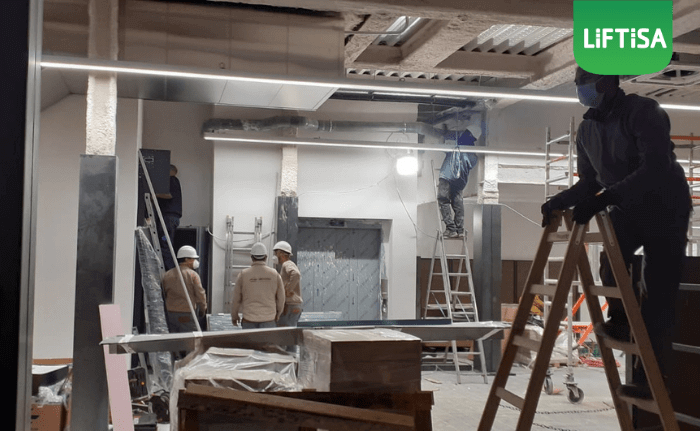
However, if we look at larger companies, ladders are becoming less and less regarded in construction, both for the client and for the company that employs the workers. The Cost of incidents and damages are increasing, making it less acceptable and more expensive to use a ladder in a professional setting.
There is a wide range of solutions on the market.
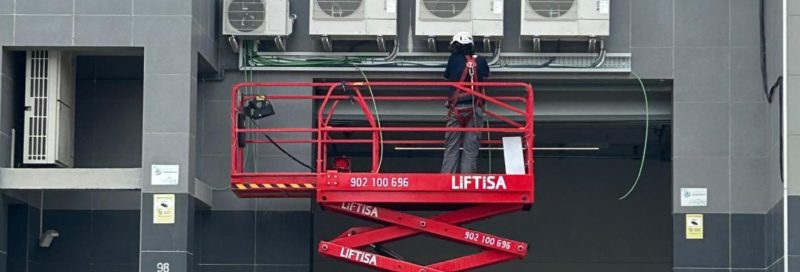
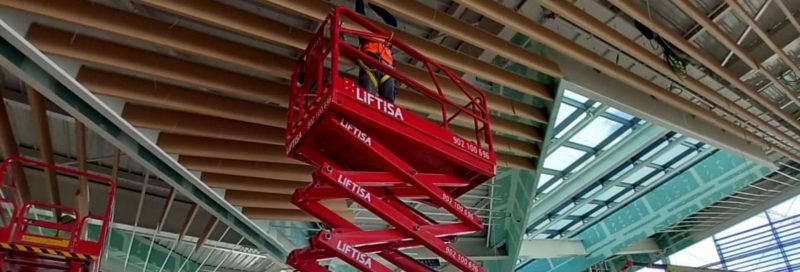
It is necessary to take into account the evolution of technology and that there is a wide range of solutions on the market for carrying out these jobs: scaffolding, low-height lifting platforms, ladders with platforms and even ladders with built-in lifelines.
The employer must be made aware that these means are safer, even if they are more expensive, and the customer must be made aware of the need to carry out the work with more safety and fewer risks for workers, even if it means a higher cost in the budget. Finally, the worker must be made aware that although his work in a Ladder is faster, it is less safe.
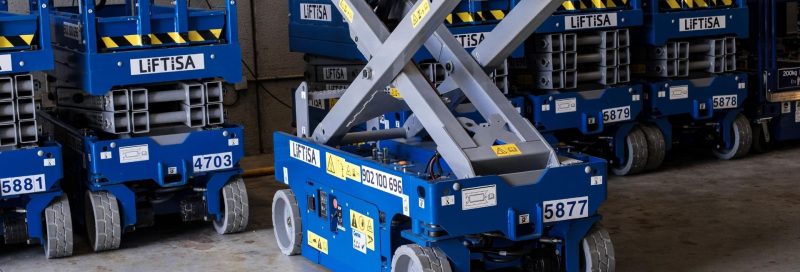
To be a viable ladder replacement, machines must be light and easy enough to maneuver to reach the desired location, be able to move in smaller, lighter vehicles, and move easily around the interior of the job site.
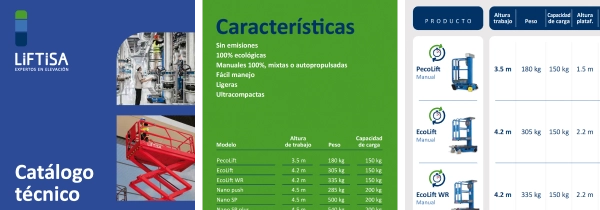
There is a wide range of solutions on the market, including our Pecolift or Ecolift lifting platform that features an energy storage system that allows for a very light crank action to lift the platform manually.
These machines are available for work at heights up to 5 meters. Weighing 180 and 305 kg respectively, they can withstand material loads of up to 150 kg. They have parts for easy transport. Both options allow workers to lift their tools and some materials and allow for a safer, faster and more efficient work.
VIDEO: Benefits of using the Pecolift vs. Liftisa Ladder .
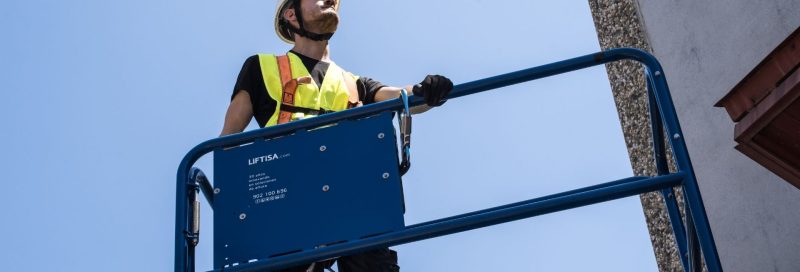
Far from reducing productivity, replacing stairs with staff lifts significantly increases productivity due to reduced fatigue, the correct height and positioning of the worker. In addition, the worker has the ability to freely use both hands thanks to the tool trays and move around the platform.
If you want to receive all the news and articles related to the sector, you can subscribe to our content newsletter.
Download our catalog
You’ll be able to view all of our products and current offers, as well as the technical specifications and other services offered by LIFTISA so you have all the information you need for your project.