Training in work at height: key to preventing workplace accidents


Working at height is one of the riskiest activities in work environments. Bad practice, an unsafe maneuver or ignorance of the equipment can lead to serious accidents. For this reason, having adequate training in work at height is much more than a legal obligation: it is an essential prevention measure and a guarantee of efficiency.
At LIFTISA, we firmly believe that safety starts with knowledge, and in this article we tell you why training is the first step to achieving the ZERO accidents goal.
Why is training to work at height so important?
The statistics make it clear: many of the accidents at height could have been avoided with proper training. Most incidents are due to human error, incorrect use of equipment, or lack of risk assessment.
Good training teaches how to identify hazards, use lifting platforms correctly, select appropriate PPE and make safe decisions at all times. It also encourages a preventive attitude among operators, which is key to reducing the accident rate.
Legal obligations and applicable regulations
Current legislation in Spain requires that all workers who use work equipment at height must be properly trained. Specifically:
- Law 31/1995 on the Prevention of Occupational Risks: it is the basic regulation of the prevention system in Spain. It establishes the obligation to protect workers against occupational risks, including adequate training for the performance of their duties.
- Royal Decree 1215/1997 establishes the minimum health and safety requirements for the use of work equipment by workers.
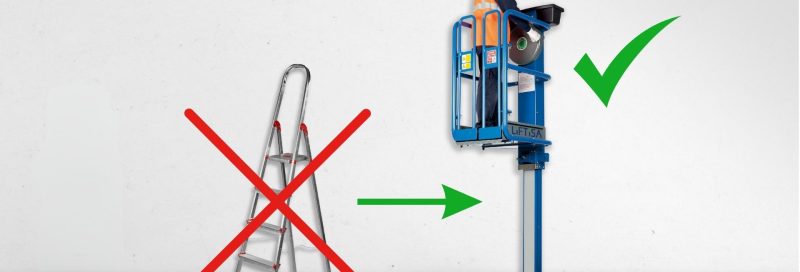
- Royal Decree 2177/2004 expands these provisions, emphasizing the need for specific training for temporary work at height, such as those carried out with lifting platforms, scaffolding or ladders. Training is not optional, it is a legal requirement and a basic prevention tool.
Types of training and what it should include
Training at height must be adapted to the type of work, the equipment and the environment. Some of the essential contents are:
- Risk assessment.
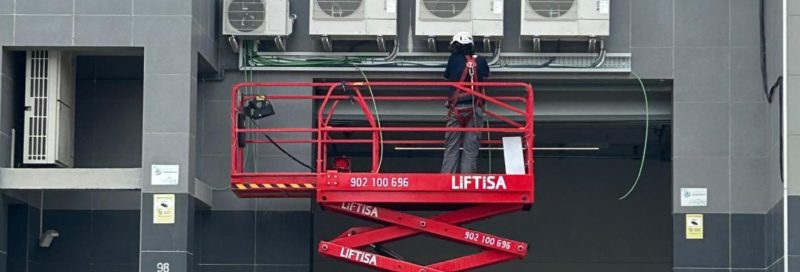
- Safe use of lifting platforms.
- Collective and individual protection measures.
- Simulation of real situations.
- Rescue and action in case of emergency.
Benefits for businesses and workers
Investing in training generates direct benefits:
- Reduction of accidents and sick leave.
- Greater confidence and autonomy of workers.
- Efficient and correct use of equipment.
- Improvement of the work environment and safety culture.
- Legal compliance and penalty reduction.
- A trained team works better, faster and with fewer risks.
Specialized training with LIFTISA
At LIFTISA we offer specialized training in work at height, MEWP, forklifts and more, focused on sectors such as installations, maintenance, facility services, construction, among others. Our training is adapted to the type of machinery that is actually used on a day-to-day basis, and always taught by certified professionals with more than 35 years of experience.
Conclusion
Training in working at height is an essential investment. It is the foundation of any safe and efficient work environment. At LIFTISA we accompany our customers not only with reliable and modern machinery, but with the commitment to help them protect what is most important: people.
Download our catalog
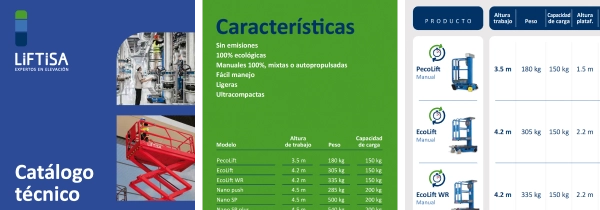
You’ll be able to view all of our products and current offers, as well as the technical specifications and other services offered by LIFTISA so you have all the information you need for your project.