CE marking on the lifting platforms. What is it and how to identify it?


Children’s toys, household appliances, electronic equipment… Countless products are marketed with the CE marking, including lifting platforms.
This is a mandatory marking in the European Union that represents proof that the product has been evaluated and meets the safety, health and environmental protection requirements required by the European Union. This marking is valid for products manufactured both inside and outside the European Economic Area (EEA).
It is not a mark of origin. I mean it does not mean that it has been manufactured in the European Union , but that the product that has been placed on the EU market complies with European safety legislation.
The European CE marking was created in 2006 to certify that a product complies with safety standards within this zone. But there is another logo that can be confused with the legal one, although it does not really correspond at all to this brand. Shortly after the appearance of the European brand, Some Chinese companies came together to create a similar brand but with a very different meaning (China Export). What do each of them refer to and how can they be distinguished?
European CE marking
The letters CE are an abbreviation and come from the French “Conformité Européenne”, which means “European Conformity”. This marking is designed by the two letters C and E, which have certain proportions, with a minimum vertical dimension of 5 millimeters.

These letters must be placed on the product or on its descriptive plaque in a visible and legible way. In addition, they must be followed by the identification number of the Notified Body involved.
This does not mean that the product has passed any control or implied warranty by any authority. It only shows that the manufacturer confirms and acknowledges that their product is safe and that it complies with the European standards that it is obliged to apply.
How do I get the CE marking?
To obtain this mark, two steps can be followed:
- Presumption of conformity: the manufacturer has followed European standards according to which the product has been made “perfectly” and therefore complies with the standards.
- Proof of conformity: The manufacturer has not followed community standards but the product still meets basic safety requirements.
It is forbidden to place signs that may be confused with this marking, both in meaning and form. A product can bear other brands as long as they are not confused with this symbol. But this is not always the case. What about the China Export brand? The same letters, placed almost in the same way.
CE Mark: China Export
It is very common for this brand to accompany some products manufactured and exported from China. The brand has a very similar, almost identical, design to the European one.
However, it is not an official European trademark and, moreover, it is considered false. Many factories in China apply this brand on their products and put them on the market, but these products, unlike those with the European mark, they have not gone through any risk or safety assessment imposed by the European Union.
These products have not been certified to EU standards and putting them into circulation on the European market is a fraud and illegal. It is about a form of deception to those who distrust the “Made in China” brand.
The decree establishes that any person who affixes marks that may be confused with the CE marking or restrict its visibility or legibility is subject to an administrative penalty and the seizure of the products.
How to differentiate the European marking from “Made in China”?
The difference is not only in the meaning. At the image level, the difference is barely noticeable. It is only reflected in the dimensions and proportions between C and E. The letters are formed identically, but the space between them is different. The letters of the legal CE mark are obtained from two circles and between the C and E there must be at least half the width of the C.

Therefore, the distance between the letters is marked by a standard and they have a greater separation between the two. The letters, in addition, must not be less than 5 millimeters and must be placed on the product or packaging. In the case of the China Export brand, This distance between the two letters, which are much closer to each other, is not respected.
Another way to distinguish the two marks is that the European marking must be accompanied by the declaration of conformity, the documentation that accompanies the product and that is separate or included somewhere in the instruction manual. This statement should include information such as:
- The name and address of the manufacturer or representative established in the EU.
- The description of the product (brand, model).
- Reference to the harmonised standards or technical specifications used
- The name of the notified bodies that have been involved in the conformity assessment of the product; the CE certificate number.
- Identification of the signatory (name, surname and position).
- Date.
It is believed that this similarity is not a simple coincidence. Probably trying Sell on the European market without European standards. There can be a great deal of variation in quality between a legal CE marked product and one from China.
CE marking on lifting platforms
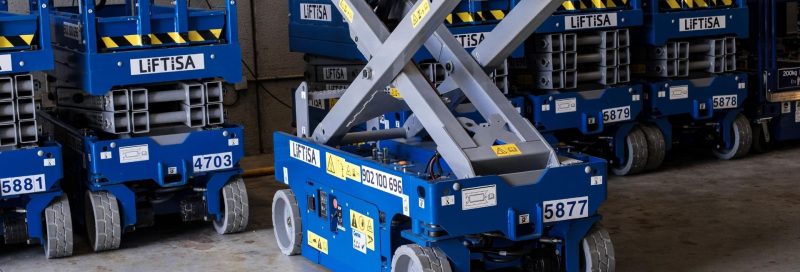
The CE marking is also a visible mark that the manufacturer of the lifting platforms must affix to the structure and with which it declares that it complies with European requirements.
According to the CE marking regulations, each machine must carry the following information in a visible and legible way:
- The company name and full address of the manufacturer, and if applicable, of its authorised representative.
- The designation of the machine.
- CE marking.
- The designation of the series or model.
- The serial number, if any.
- The year of manufacture (i.e., the year in which the manufacturing process ends).
If you don’t want to miss any of the news about regulations and other topics in the sector, subscribe to our biweekly newsletter.
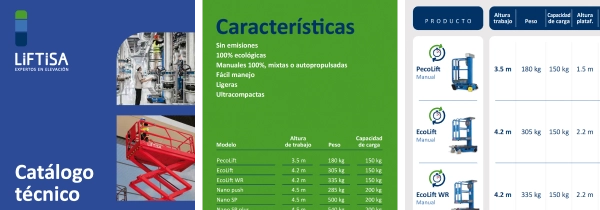
Download our catalog
You’ll be able to view all of our products and current offers, as well as the technical specifications and other services offered by LIFTISA so you have all the information you need for your project.