Where and when to use low-height lifting platforms?


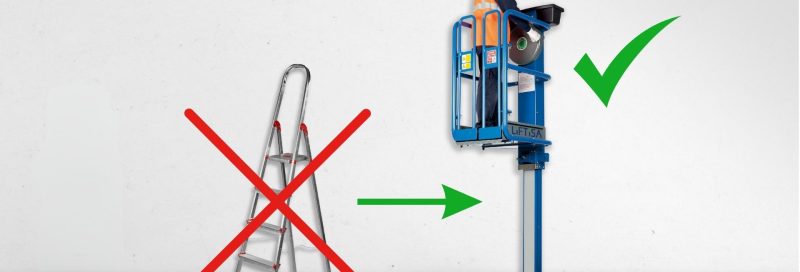
To work at height with maximum safety, minimising risks and with the highest possible efficiency, modern solutions are needed and old habits such as the use of ladders are needed. At Liftisa, our goal is to do just that. We explain where and when to use low-rise lifting platforms.
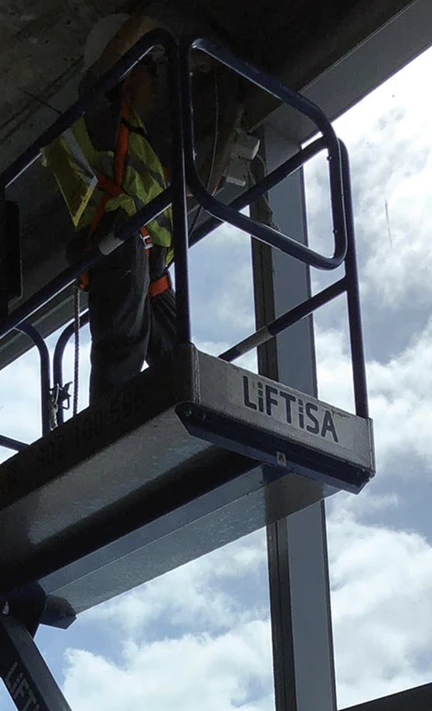
We want to make sure that operators can work safer, more efficiently and more comfortably. For this reason, our solutions are always designed with the operator in mind. All our products have a Fully Protected Security Platform to raise the operator to the desired height. As soon as the operator gets up, the machine stops automatically. The operator can then Easily adjust the height up and down to work comfortably and efficiently for longer. These features make our solutions ideal for installations, maintenance and repair work at reduced heights (up to 5.1 metres).
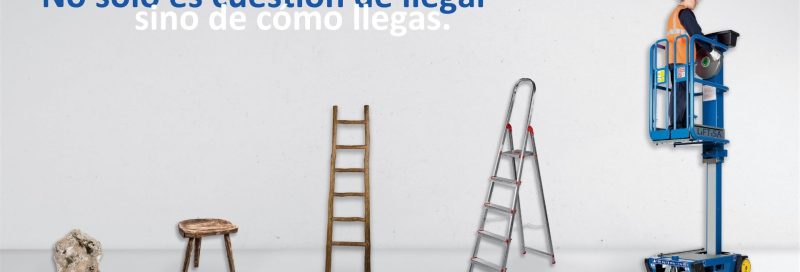
Our goal is to offer smarter alternative solutions to traditional working methods, such as ladders and podiums. Our products create a safer and more sustainable working environment, improving productivity and efficiency and reducing body stress and fatigue of users.
Low-rise lifting platforms are designed to help operators safely install, maintain, and repair buildings, industrial sites, process equipment, and systems, while reducing the potential for musculoskeletal injuries, stress, and fatigue.
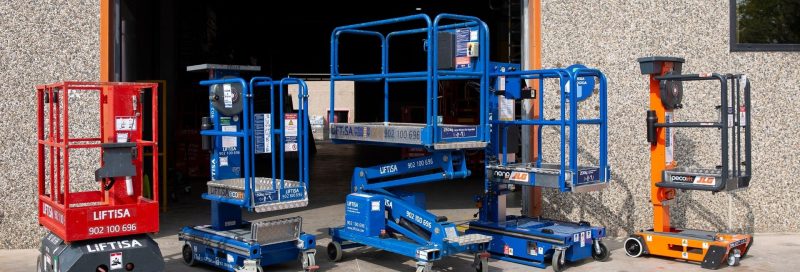
Types of low-rise lifting platforms
-
Manual: manual push, manual lift
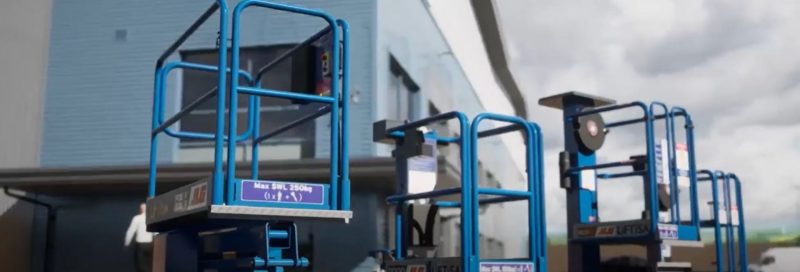
They are unique platforms and combine a patented mechanism, so no batteries or hydraulics are needed. They don’t need to be charged and are always ready to go. These types of low-rise lifting platforms are a better way to work at low heights and change the way operators perform maintenance, repair and installation tasks.
-
Mixed: manual push, electric lift
These platforms They increase operator control and reduce damage by minimizing complexity. The operator has More space to work in tight areas. They are ideal for working in busy areas such as tent assembly, for one-off jobs, new constructions or maintenance.
-
Electric: self-propelled
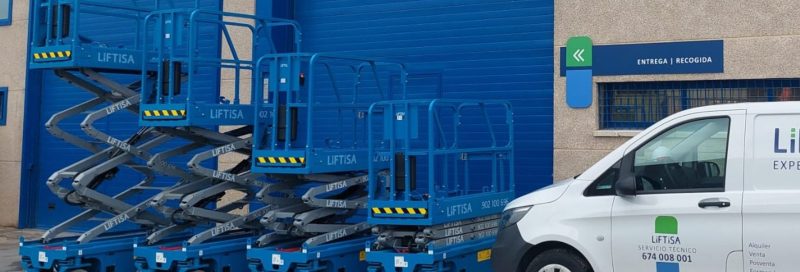
These are the traditional lifting work platforms but they are more compact and offer less load on the ground. These products are perfect for reaching obstacles.
Where and when to use low-height lifting platforms?
-
Commercial Properties
Low-rise platforms are a solution that offers a safe and efficient alternative to traditional methods. Whether it’s managing Fitting out or refurbishment for construction, a trade, or for a warehouse or to perform maintenance for a hotel, an oil rig, an office building, an exhibition hall, or a stadium.
In addition, these lifting platforms also offer solutions specifically designed for supermarkets, which allow workers to overcome obstacles or reach packages.
-
Building Conditioning
They are ideal at the end of construction projects for multi-story office buildings, data centers, hospitals, etc. These lifting platforms can be used in a wide variety of applications such as ceiling grid installation, HVAC, sprinkler systems, electrical wiring, lighting. In fact, any application that requires working up to 5.5 m.
-
Maintenance of institutional buildings
Hospitals, museums, government buildings, schools, and universities use this type of lifting platform on a daily basis. Thanks to its ease of use, reliability and Low noise, these platforms improve productivity and provide a safer working environment, while minimizing disturbance in the immediate vicinity of the work area.
-
Production and installation of large vehicles
From aircraft maintenance, hangar to larger vehicle production facilities, manufacturing line inspection and truck and engine repair, these boom lifts are tailored to your needs.
-
Industrial Facilities
For the industrial market, low-rise lifting platforms provide the smartest solution compared to traditional means. They also meet the requirements of Safety at height and sustainable employment for large multinationals concerned about workplace well-being.
-
Hazardous Work Areas
There is a range of machines on the market specifically designed for hazardous work areas. Thrust motorless solutions can be used in a variety of applications such as those found in petroleum refining facilities, food production, petrochemical industries, etc.
But in addition, there are ATEX versions, certified to work in highly restricted areas. Optional stainless steel or galvanized steel versions are available when the location and application require it.
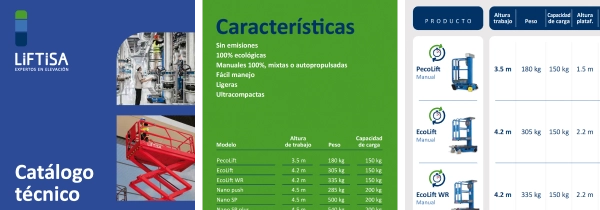
Check out our catalogue of low-rise lifting platforms and contact us if you have doubts. We advise you!
Download our catalog
You’ll be able to view all of our products and current offers, as well as the technical specifications and other services offered by LIFTISA so you have all the information you need for your project.