Women in Construction: Opportunities in a Growing Industry.
From the boom in manufacturing during the two world wars to the Great Recession of 2008, the U.S. labor market has undergone several major changes over the past 100 years.
Beginning in the 1960s, the United States experienced a sharp increase in the female workforce that continued into the 1980s.
This increase slowed in the 1990s and has since leveled off, with 56.9% of women participating in the workforce in 2019.
While they account for more than half of all workers in occupations such as education and health services, financial activities, and hospitality.
Women are still vastly underrepresented in agriculture, mining and construction. In fact, women accounted for only 10.3% of the construction workforce in 2019.
In 2019, 57% of women participated in the U.S. workforce. But only 10% of the construction workforce were women. This sector represents a great opportunity for women to access stable and well-paid jobs ranging from field technicians to carpenters or project managers. And the best part? Experts predict that this sector will experience above-average growth until 2026.
Let’s explore what it’s like to be a construction worker, including statistics, benefits, barriers, and initiatives designed to help women succeed in this traditionally male-dominated field.
Some data in Spain.
The number of women in the construction sector fell in the last quarter in Spain. The lowest female employment figure in the market, by far of the percentage achieved in agriculture (23.7), Industry (25.2%) and services (53.6).
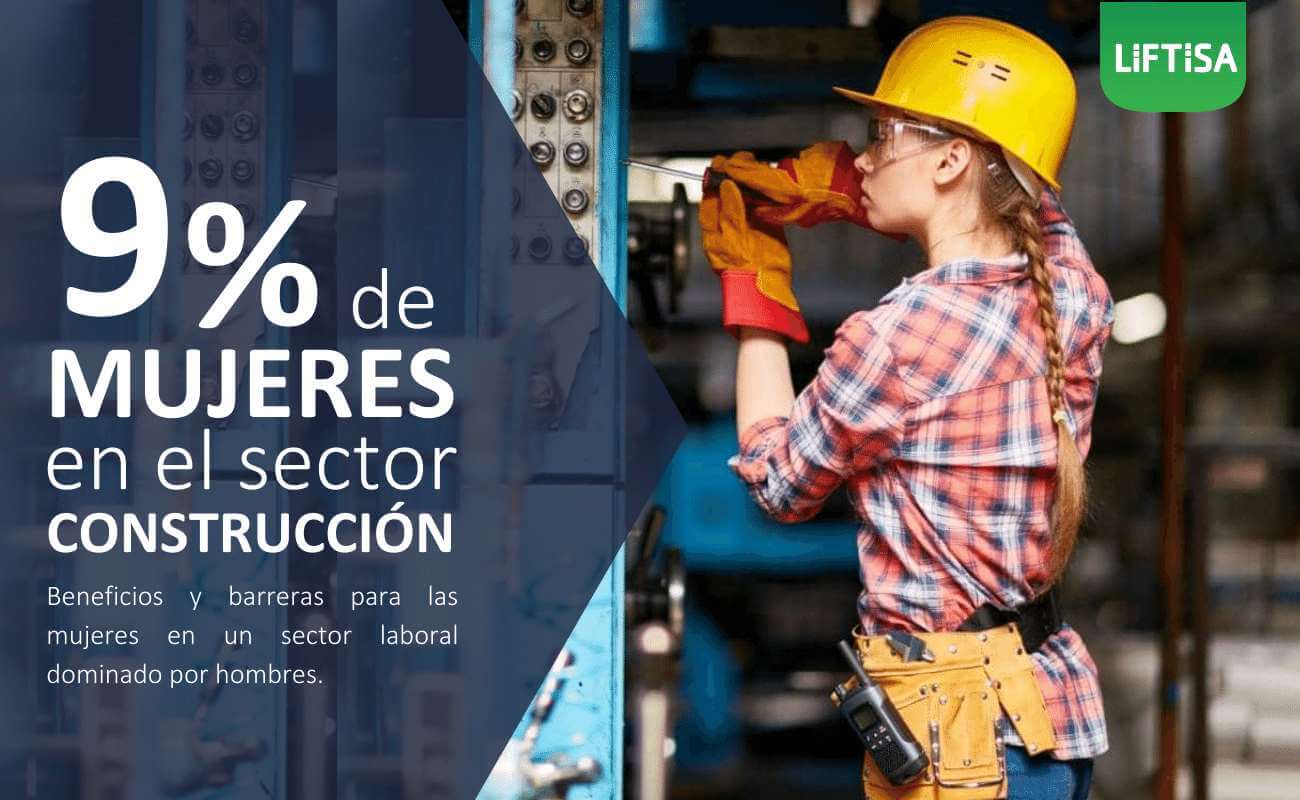
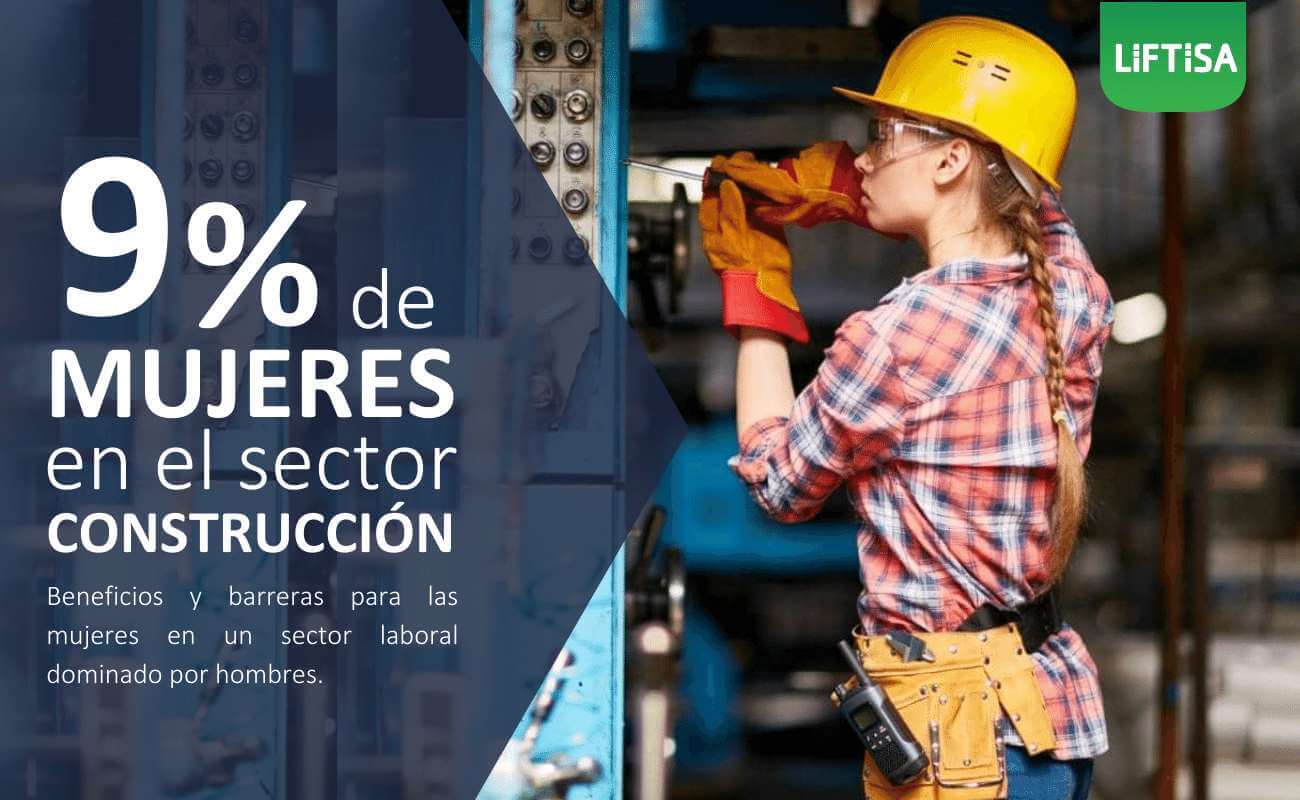
Now, in 2019 only 9% of people working in construction are women, although if we look back, 10 years ago, this percentage was 7.6%.
A brief history of women construction workers.
Historically, women have not held jobs in construction, and it’s important to understand why. The most important factor is cultural: it wasn’t until the mid-1960s that women began to wear trousers outside the home, let alone put on a helmet and go to the construction site with men. Western society was based on the traditional roles of men and women, and in the past, this tradition discouraged women from taking up jobs in fields such as construction and engineering.
However, women who entered the workforce in the early years of the women’s labor movement often moved away from skilled jobs.
Instead, they engaged in occupations that were considered “women’s professions,” such as nursing, teaching, or secretarial work.
Women who opted for non-traditional jobs were met with an unwelcoming response from both their male partners and other women who continued to cling to the traditions of the time.
In recent decades, however, women have begun to break down the barriers they faced, seeking employment in the trades and in industry in general. Their share of the construction workforce tends to increase, and not only in office and management positions.
The increase of women in construction.
According to the Institute for Women’s Policy Research, the number of women working in the construction trades in 2018 was the highest in 20 years, thanks to a 17.6% increase in female employment growth between 2017 and 2018, a figure that dwarfs the 3.7% increase in total construction job growth in the same period.
The share of all women in the construction industry also increased by 13.8% during that time, showing that more and more women see the construction industry as a viable employment opportunity.
Greater opportunities for women in construction.
So why is the number of women opting for careers in the construction sector increasing? There are many personal and economic factors that make this type of employment an ideal choice for women across the country.
In addition, as more and more women choose jobs in construction, the number of female mentors in industry associations, women-focused initiatives, and women-owned construction companies is increasing, helping younger women see it as a potential career path.
Comparable salaries and benefits.
Although there is still a slight discrepancy in the construction industry, the wage gap between men and women is significantly smaller in this sector than in others. Women typically earn 99.1% of what men earn in construction.
Many construction jobs only require a high school diploma and on-the-job training, but they pay well above minimum wage. Additionally, by having the opportunity to work full-time in construction instead of having multiple part-time jobs, workers receive benefits such as health insurance and paid time off.
Lifestyle and job satisfaction.
Another, less tangible benefit for women working in construction is the increase in their overall job satisfaction. Unlike many offices, construction offers employees the satisfaction of having built something real at the end of the day. Whether it’s building a new road, wiring a school, or completing hospital expansion work, the work that construction workers do can affect the daily lives of millions of people.
While many people find construction jobs to be hard—and sometimes dirty—these jobs also help employees maintain an active lifestyle. Instead of being tied to a desk all day, construction workers are free to move and work with their hands.
Barriers for women construction workers.
The recent increase in the number of women in construction is promising for a sector that needs workers. But there are still barriers for women who choose construction as a career path. While some of these barriers will require an ongoing effort on the part of employers to resolve, others have begun to disappear as more and more women choose this career.
-
Unconscious biases:
Some attitudes and beliefs are so ingrained in our culture that people’s decisions are influenced by them without them knowing it. For example, an employee may be left out of social events without having the opportunity to make her own decision about her participation.
-
Gender discrimination:
Discrimination is the conscious decision to deny women the same opportunities or privileges that would be granted to men in the same position.
-
Increased risk of injury:
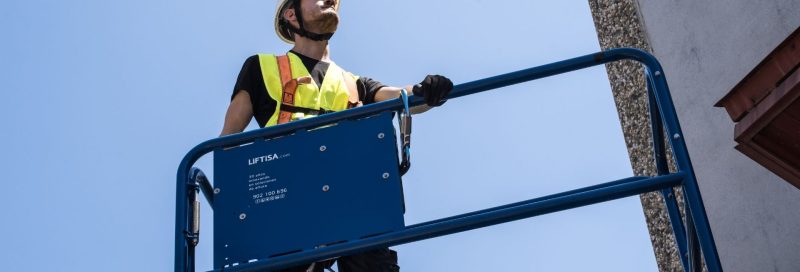
Since the majority of the construction workforce is male, safety equipment designed based on women’s anthropometric data (body measurements) is not always available.
-
Lack of female mentors:
When women first entered this sector of the workforce, much of their training was provided by men who were unwilling to help a woman advance in the industry. Today, there is still room for improvement, but overall there are many more empowerment initiatives and resources for women in construction.
-
Wage gap:
Although the gender pay gap in the construction sector is smaller compared to other sectors, there is still a discrepancy. To overcome this barrier, employers must continue to commit to diversity initiatives that create a fair and balanced workplace.
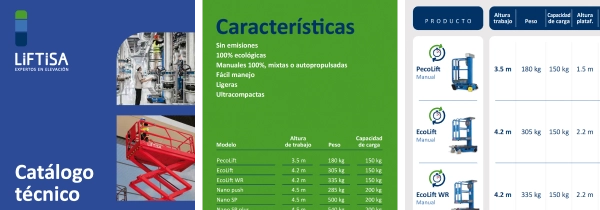
Download our catalog
You’ll be able to view all of our products and current offers, as well as the technical specifications and other services offered by LIFTISA so you have all the information you need for your project.