Fatigue in working at height: Stairs vs Low Level Access.
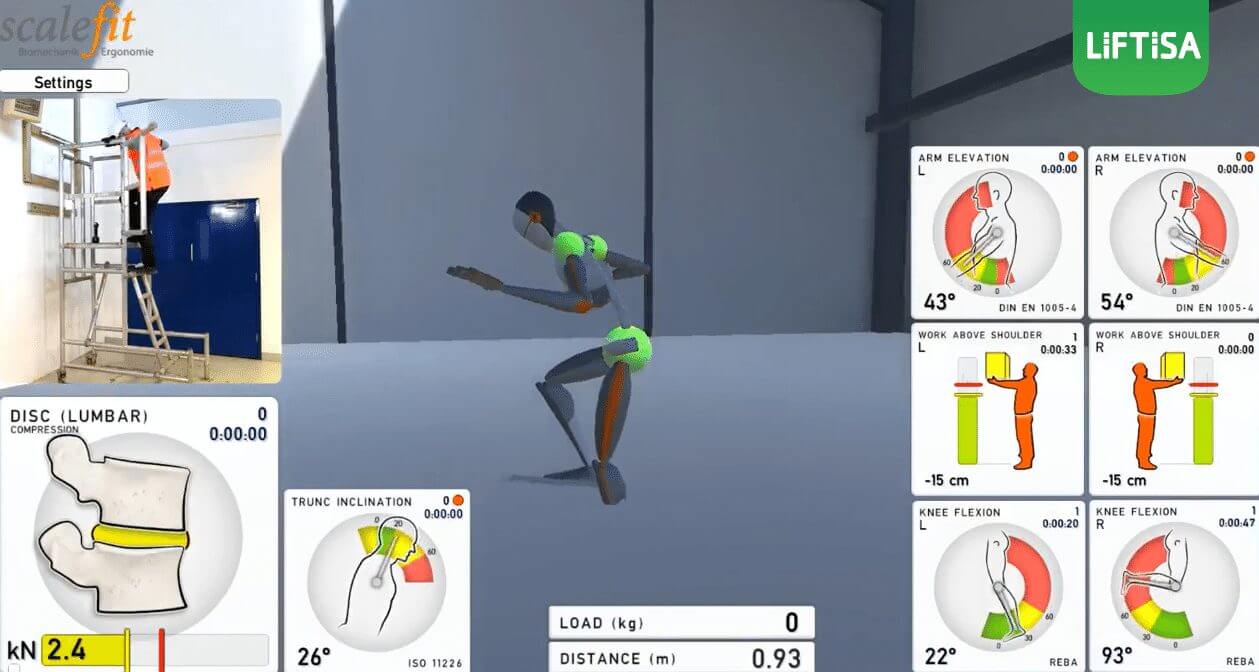

Impact on the body of the ladder
Using a ladder puts a strain on the worker’s back and knees.
JLG Industries Partnered with DorsaVi to conduct a study on worker fatigue while using a ladder or scaffold. The test uses electromyography (EMG) to measure muscle responses.
The study revealed that both ladders and scaffolding increase loads on arms, shoulders and knees when going up and down and when working at height.
For example, a ladder causes a high load on the worker’s knees by descending 70% of the time; A low-height access product does not place a high load on the knees.
The muscles are constantly pushing themselves to the limit when carrying materials up a ladder – the knees, back, shoulders and arms are going to get fatigued.
Slips, trips, and falls are more common and lead to injuries when fatigue sets in.
According to the Bureau of Labor Statistics, half of ladder accidents are caused by people carrying objects while climbing.
These accidents are likely due to two reasons:
- It is dangerous to carry something while climbing and often avoids three points of contact.
- It can lend itself to an overextension of your body.
A new solution
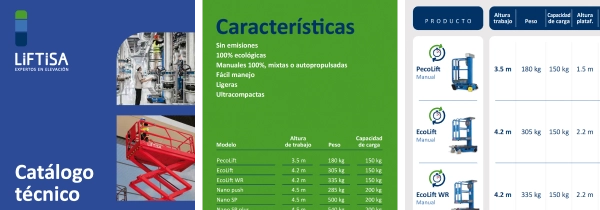
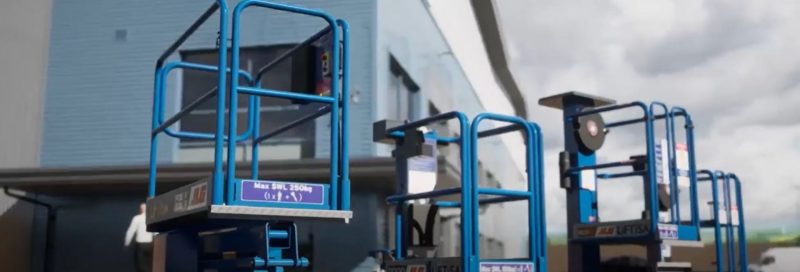
A platform lift such as a Pecolift and Ecolift is used instead of a ladder. It is clear that, even if you start spending between 200 and 300 euros on a staircase, a work injury will cost you thousands of euros. Therefore, we recommend the use of small lifting platforms.
There is now a safer alternative and an emerging category of solutions that reduce the risk of costly construction injuries: low-level access products.
One of these other solutions is our Power Tower platform, a platform that passes through doors, has reduced dimensions and can be uploaded by two users.
It can be easily maneuvered around the job site without causing damage to walls and door frames, a concern commonly experienced with drivable machines.
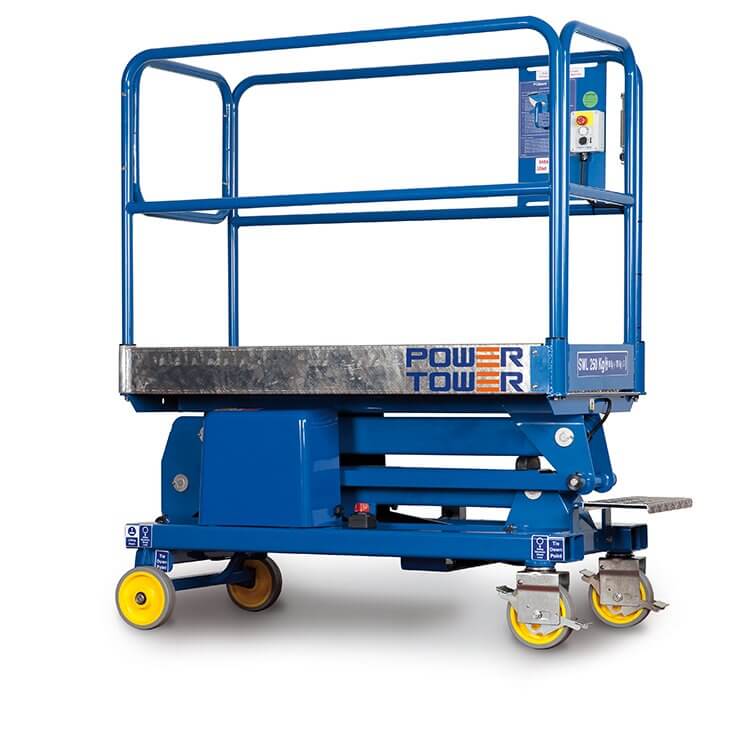
This means that contractors do not have to carry heavy materials and tools to work at height.
They can simply charge them onto the platform and use the battery power to lift them as far as you need to go.
Also, they don’t have to make multiple trips, because you can only carry a certain amount of things on a ladder and with these low-rise lifting platforms, you can carry and have everything you need when you ascend.
Its lightweight design makes it ideal for sensitive loads on the floor or during final finishing work.
Low-rise platforms not only reduce unnecessary climbs and wear and tear on the back and knees from push-ups, but also eliminate other risks.
Correct ladder use requires three points of contact, which can be challenging if you’re trying to do overhead work, such as electrical or mechanical work.
Let’s take a look at the deadly falls.
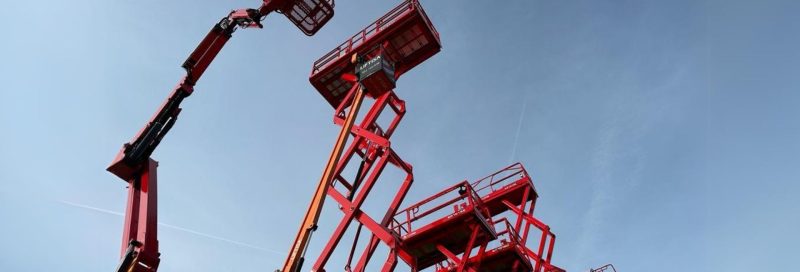
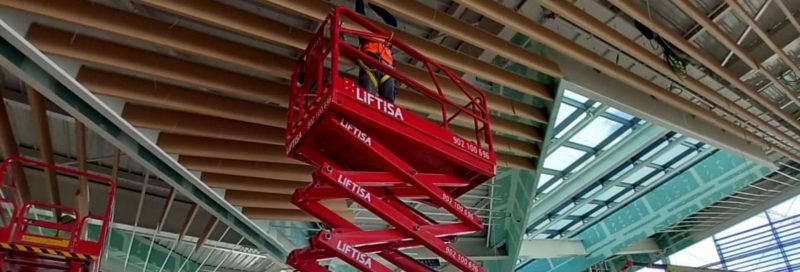
Over a seven-year period, there were 23 fatal falls from scissor lifts.
That’s an average of three fatal falls per year, compared to about 100 fatal falls per year for construction workers using ladders.
Remember that a single construction injury has an average cost of €31,000, according to a study by the University of Navarra.
The cost of renting a more secure low-level access product for a year is on average: €6,000.
Which product provides you and your workers with the best value?
You can see the availability of low height machines that we have at Liftisa, by seeing our Low Level Access section here http://liftisa.com/alquiler/alquiler-low-level-access/ you can see the technical characteristics of each one, images of how to work with them.
Download the technical sheet and you can also visit our youtube channel to learn how it works https://www.youtube.com/channel/UC0QUzkqsRYS33RzSfy7k_Iw/videos
902 100 696
Call us and we will advise you.
Download our catalog
You’ll be able to view all of our products and current offers, as well as the technical specifications and other services offered by LIFTISA so you have all the information you need for your project.