How to relieve the stresses of working at height?


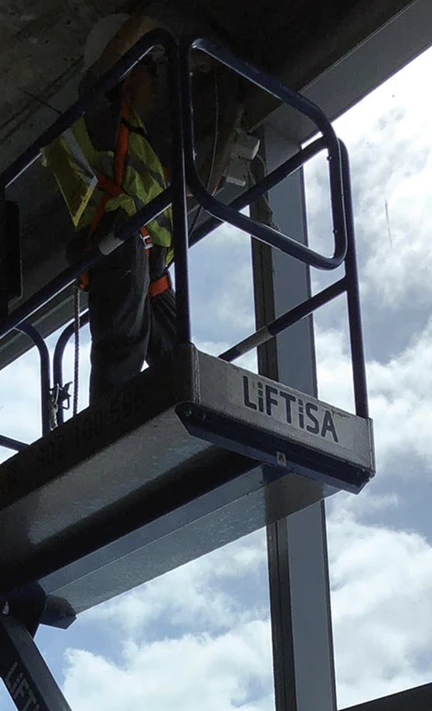
Some jobs that are carried out at height, especially those that require work above the head, require forced postures that involve arms, shoulders, cervicals, etc.
Performing interventions or installations, overhead, in this position for an extended period of time can lead to muscle and joint injuries. But there are ways to relieve tension in these parts of the body.
Risks of prolonged work at height
There are several reasons why workers may struggle to do their jobs safely and productively. In some cases, their vision may be obstructed, making it difficult for them to see where they are operating. They may have trouble placing a tool because their arms are in an awkward position. Or they can work in forced postures for a long time, which will undoubtedly lead to overload, muscle or joint pain.
Overhead work has the potential to put pressure on your shoulders and neck. Especially if workers are holding tools or materials above shoulder height.
Or if they turn their body to access work with their arms raised.
Injuries are also more likely if they use strong, repetitive motions. Also, if they are asked to lift and hold heavy materials overhead.
Safer solutions.
For these work at height in forced positions, while overhead work cannot be done in any other way, it is possible to complete these tasks in a way that reduces strain on the shoulders, neck, and arms of the workers.
Depending on the work to be done, there are several solutions that reduce the time the body is exposed to this strain or eliminate other potential safety hazards to increase productivity.
Some things that can be done to minimize or eliminate awkward poses:
- Modify tools: There are many adapted tools that eliminate the need for workers to raise their arms. Drill bit extensions for drills and screwdrivers are one example. These allow workers to hold tools at waist or shoulder level. Instead of overhead while performing tasks.
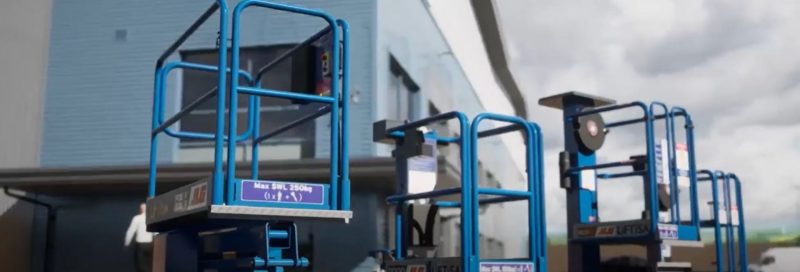
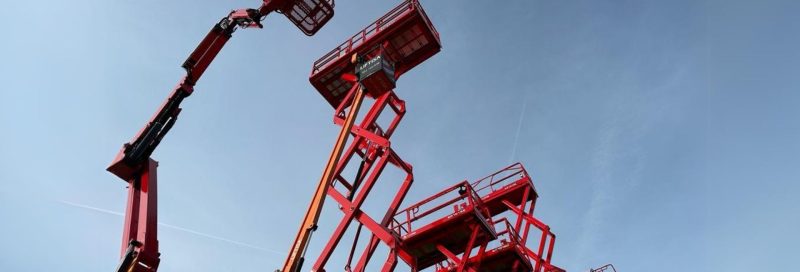
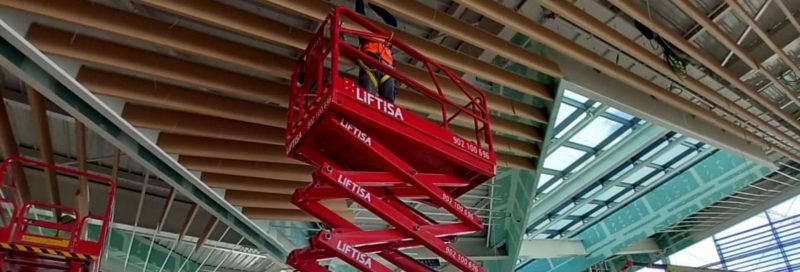
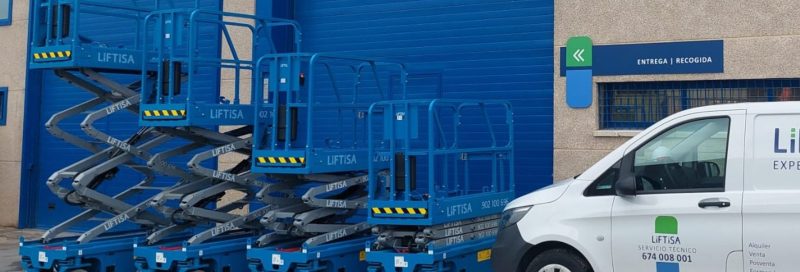
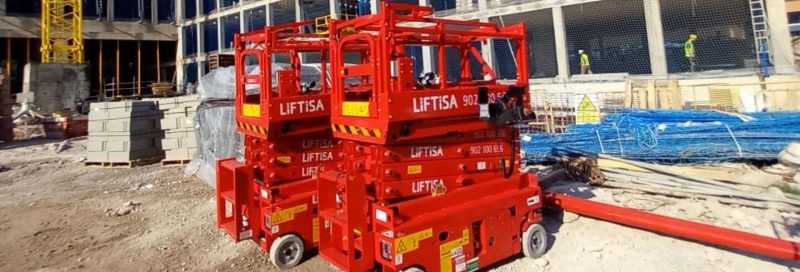
- Use the right lifting platform: Whether you’re lifting people or materials, lifting platforms for people or loads are more effective, efficient, and safer than climbing stairs or lifting objects manually. Low-rise lifts are specifically designed for working indoors. For installations or applications that require low height, but versatility of movement and wide access.
- Establish work cycles: If you can’t remove tasks from a job, set cycles that mark their completion. Encourage frequent breaks and require workers to use safer work practices and appropriate equipment, PPE.
- Provide Training: Train workers in the use of elevating platforms, the use of PPE, and health and safety measures. Simple training can help workers feel confident in identifying potential problems and finding effective solutions to reduce tension.
Want to keep up with industry news and trends similar to this one? Be sure to subscribe to the Liftisa Newsletter, every fortnight you will receive information on Safety, news on Lifting Platforms and recommendations on working at height.
We advise you.
902 100 696
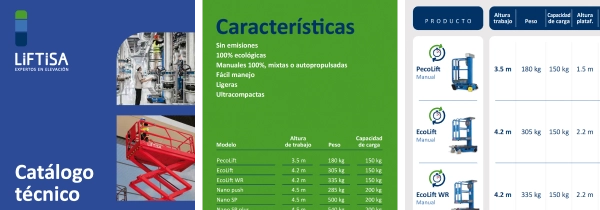
Download our catalog
You’ll be able to view all of our products and current offers, as well as the technical specifications and other services offered by LIFTISA so you have all the information you need for your project.