Permits required for the use of lifting platforms.
What permits are essential?
Not just any company or staff can use or carry out commercial activities with the use of single-person lifting platforms and forklifts. Because they are tools that can pose a risk, the law has intervened in it. The following are the permits for the use of lifting platforms that are required.
In order to understand the requirements in a simple way and have them located, we have “filtered” them so that you have an easy guide that you can always carry in your favorite bookmarking program.
Law 31/1995. Prevention of occupational risks
Law 31/1995 on the Prevention of Occupational Risks establishes the protection of the health of workers in the work environment. There are three articles of this law to which special attention must be paid: Art. 18, Art. 19 and Art. 41.
S.18 The employee must be trained and informed to protect himself
It includes the measures to be adopted by the employer to ensure that workers receive all the information and training that will enable them to ensure their own safety.
Companies that have workers’ representatives must organise themselves to transmit all the information relating to the possible occupational risks that may occur to workers. That is, it will be their competence to be informed of any aspect that can be improved or necessary to be addressed to guarantee the safety of employees. The latter, in turn, must transmit it to the corresponding department.
Employees can make proposals and suggestions regarding everything that concerns their personal safety, health and well-being.
DISCOVER OUR TRAININGS
Art. 41 Handling of corrosive or toxic products
Article 41 summarises that importers, manufacturers and suppliers have the duty to ensure that the equipment does not constitute any type of danger to the worker.
However, users must use the machinery, as they have been trained to handle it.
The aforementioned are also obliged to package and label them in such a way as to allow their conservation and handling in conditions of maximum safety.
When we talk about this, we are referring to products that can be corrosive or toxic. The type of risk it is aimed at, the level of protection and the correct way of use must be indicated on each product.
Likewise, the employer is obliged to guarantee order and security in this area and the employee to use the materials as indicated.
Art. 19 The heart of the organization must be recycled in preventive matters
This article states that the worker, within the business organization, must receive theoretical and practical knowledge that is appropriate to the activity he or she performs. In addition, it must be prolonged over time, so there must be constant recycling. It must be taught within the working day.
R.D. 1215/1997. Minimum Health and Safety Provisions for Work Equipment Workers
Article 5-1 refers to what has already been observed in Articles 18 and 19. In Art. 5-2 it refers to the experience of manipulation that is obtained from the objects of work.
Articles 3-4, 3-5 and 5-1 state that the use and handling of work equipment must be carried out by highly trained professionals, and the employer must adopt the appropriate measures to ensure that those who use this machinery are protected. (3-4)
The employer must adopt the pertinent measures so that the work teams are maintained during the performance of the tasks that are going to be carried out with it. Maintenance should be performed based on the manufacturer’s instructions. (3-5)
On the other hand, we have Annex II that indicates the optimal and minimum conditions required for the condition of mobile work equipment, whether automotive or not. Driving automotive work equipment can only be carried out by those who have specific training in the field and that enables them to work safely. All this information can be found in R.D.1215/1997
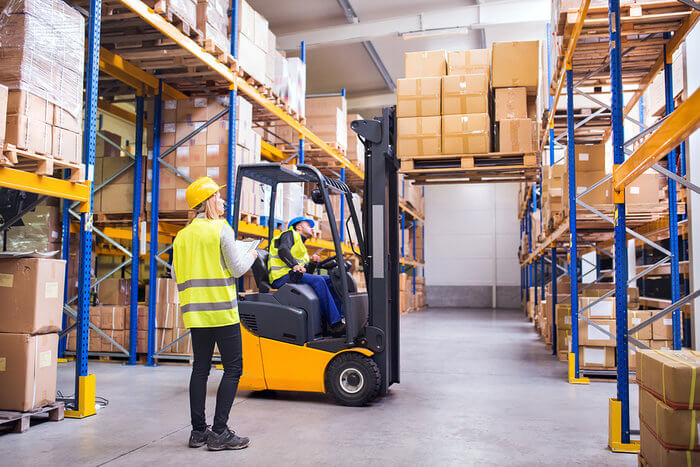
Certificate of safe use of forklifts
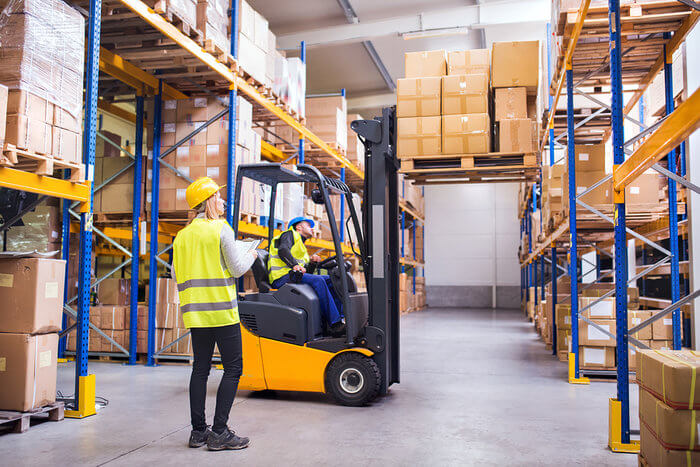
This is a specific training aimed at handling truck operators that will train them to handle those that have support for loads of up to 10,000 kilograms.
It should be noted that supervisors and trainers also have the need to carry out the training and two types of certificates are obtained: Type 1 and Type 2. Type 1 is for the use of pallet trucks, trolleys, stackers and tractors. Type two, for forklifts.
DISCOVER OUR TRAININGS
Art. 433 R.D. 2177/2014 Safe use of scaffolding
The assembly, use and dismantling plan will be mandatory on suspended platforms of variable level, those temporarily installed on a building or in a structure for specific tasks.
Scaffolding made up of prefabricated elements, which are supported on different terrains, whose height exceeds 6 meters or have horizontal elements. Also in scaffolding installed outdoors, in access towers and mobile work towers in which the work is carried out at an altitude of more than 6 meters from the operating point located on the ground.
Something noteworthy is that in the case of scaffolding, which has the “CE” marking, the aforementioned plan may be changed by the specific instructions of the manufacturer.
Safe use of MEWPs
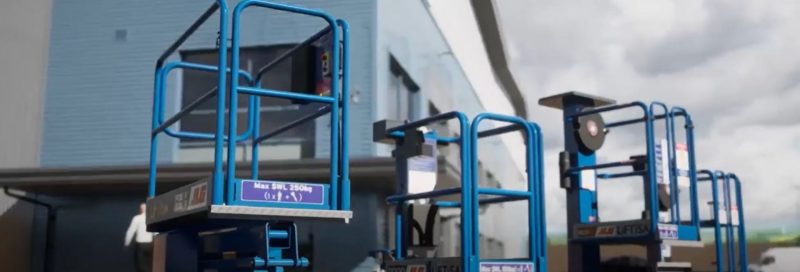
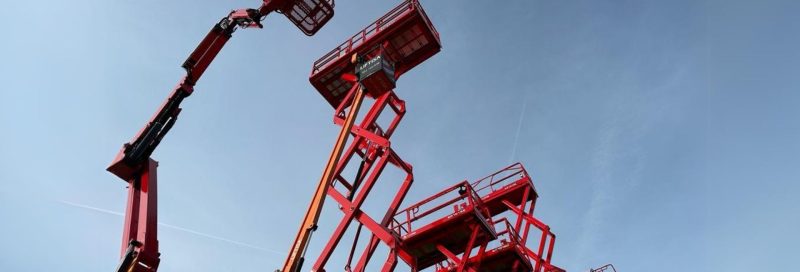
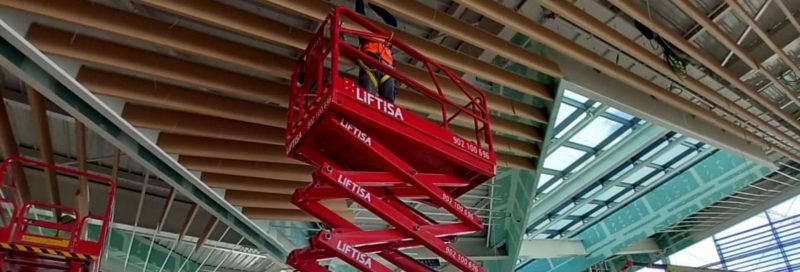
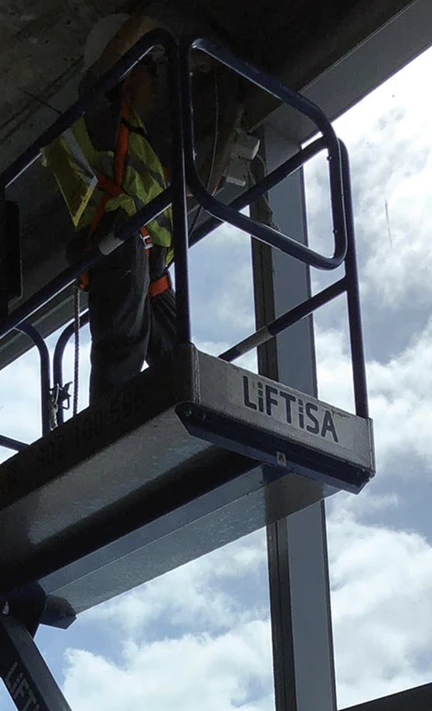
To correctly use and operate MEWPs (Mobile Elevating Platforms for Personnel) it is necessary to have the UNE-58923:2014 training. This enables the conduction, use and management of different groups and types of MEWPs. Several certificates are available.
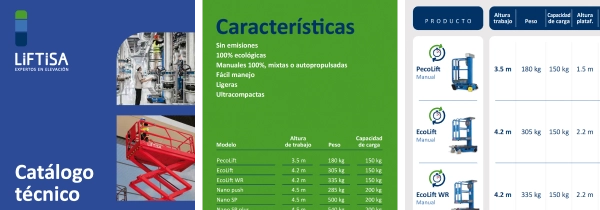
Download our catalog
You’ll be able to view all of our products and current offers, as well as the technical specifications and other services offered by LIFTISA so you have all the information you need for your project.