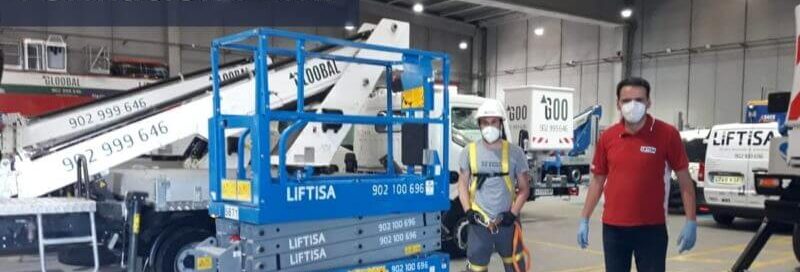
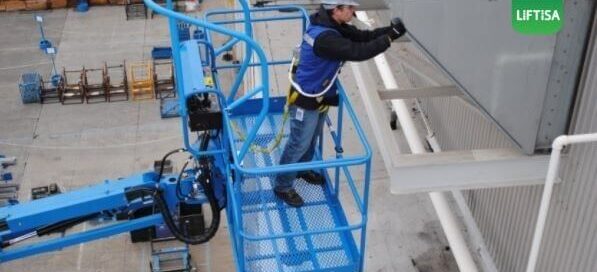
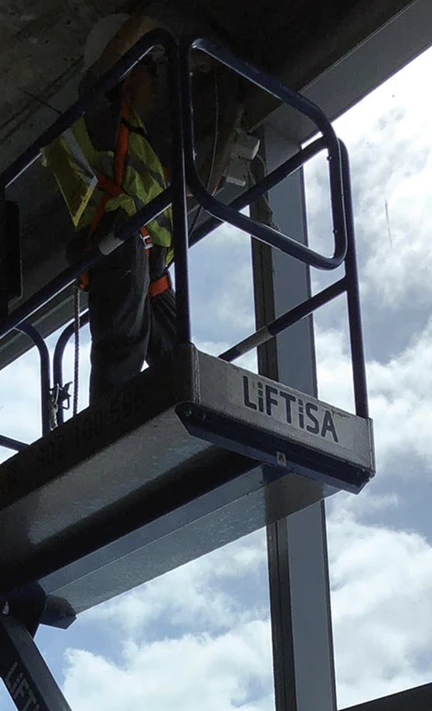
Train your employees. We advise you.
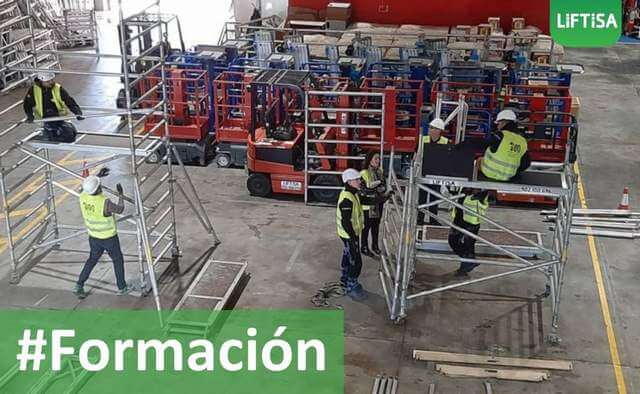
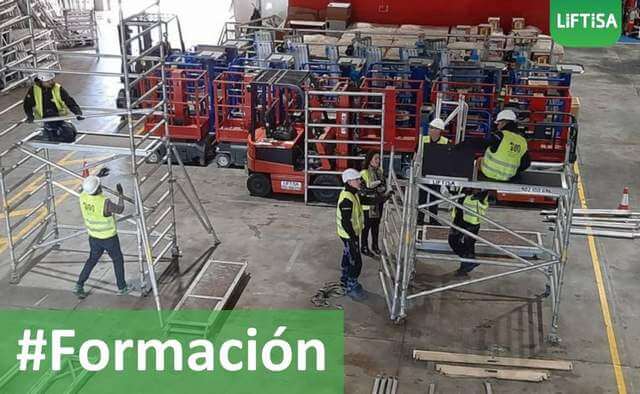
Our greatest recommendation is to have well-informed and trained teams to carry out their functions in the workplace in the most effective, efficient and safe way.
What should the user take into account?
To ensure safe use, the user must have the correct information and training. According to Law 31/1995, on the Prevention of Occupational Risks, and the duty of protection. As well as the Minimum Safety Provisions, defined by RD 1215/1997, which provide knowledge of risks, use and driving.
What should you consider when using the platform?
If you use a MEWP…
You must have Approved Training in the use and management of MEWPs. UNE 58923:2014.
If you use a Wheelbarrow…
You must have the Training of Forklift Operators TYPE 1: Transport Trucks, Tractors, Stackers, and TYPE 2 for Forklifts.
If you use scaffolding…
You must have the Specific Training in Scaffolding and know the Assembly and Dismantling Plan according to RD 2177:2014.
By making safety a joint, collaborative effort that incorporates your entire team, potential hazards are more likely to be identified and corrected before they cause accidents.
Be open-minded.
People are more likely to get involved if they have information, share it with them, and involve them in the development of the security program that is implemented, as well as in the trainings that are developed. A participatory approach is required so that the team can talk openly about problems, potential improvements, and opportunities.
Creating an environment in which improvements can be suggested without negative proposals is critical to developing a positive safety culture.
A committed management team.
That it promotes change and transmits it to all its teams, that it gives the necessary weight and reinforces it positively. You must be committed to a positive work culture, want to see daily improvements in how the organization is addressing safety, and prepared to support the team. Having the support of senior management is critical to success.
Communication
The purpose of communication should be to convey information about all safety-related elements.
This goes beyond communicating incident rates and recent events. When workers have experienced improvements in working conditions or are trying a new tool/method, it is important to share progress with the organization.
If you want to change the behavior of your workforce, consider how messages are conveyed, whether they are posted on a board or included in a monthly meeting or shared through digital means that will make everything more accessible and collaborative.
The way an organization communicates will demonstrate the commitment it has to make changes and improvements.
If you want to receive our biweekly newsletter, do not hesitate to subscribe in the form.
Call us, we will advise you.
900 100 696.
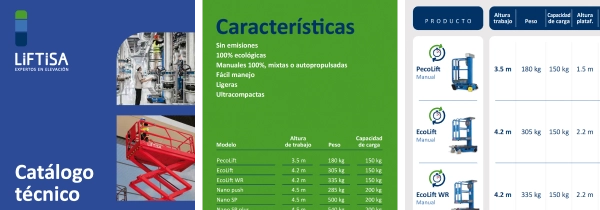
Download our catalog
You’ll be able to view all of our products and current offers, as well as the technical specifications and other services offered by LIFTISA so you have all the information you need for your project.