What does a good MEWP Training consist of?


One of the biggest challenges facing our industry today is how to increase awareness of why Machine Operation Training is so important.
What does a good MEWP training consist of?
As the industry prepares to implement ANSI and changes to approved CSA standards, they will need to understand their responsibilities with respect to the Training requirements for MEWP mobile elevating work platforms, according to UNE 58923 or UNE 58451.
This basic principle cannot be limited to what the law requires of them and what OSHA enforces, but they know that there are very good reasons for TRAINING to keep their operators safe and away from accident risks. It is a direct benefit for the company.
Many companies are faced with the dilemma of how to ensure that their operators are properly trained. This is one of the first steps to help prevent accidents.
MEWP training for teams.
Becoming a trained and qualified MEWP operator is a process that won’t take much more than a week. They must complete theoretical and practical knowledge, and in both cases take a training exam.
Training operators on how to operate the boom lift requires much more than a familiarization exercise. The objective of the training is for a person to become a qualified operator, with the theoretical and practical knowledge to do so.
It should also include a practical, in-depth, in-person component that involves practice with the MEWP, ideally with the same one you will use on a daily basis. This is one of the advantages of taking the Course with LIFTISA.
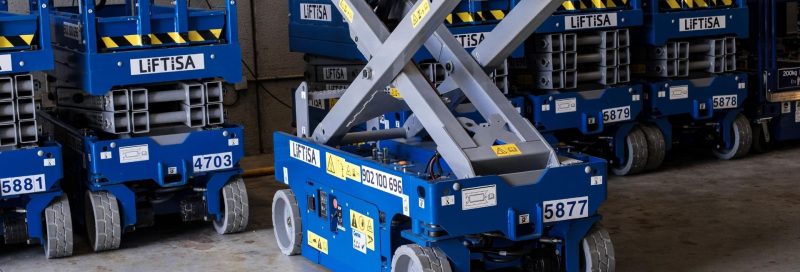
We have the machine you need for training. The same one you use in your day to day.
It should be borne in mind that each manufacturer follows different premises, which reinforces the need for the operator to be familiar with the MEWP they will be operating.
Security Training. Pre-start instructions.
The standards also require users to know how to properly perform a pre-start or pre-operation inspection, including performing functional tests on the machine before each shift (or before it is used by a different operator within the same shift). Responsibilities associated with problems or malfunctions that affect the operation of the MEWP should also be discussed so that the operator knows what to do if something goes wrong.
The factors that affect the stability of the platform with the user are critical and they must be reviewed in depth. For example, an operator must be able to recognize hazards and take appropriate measures to avoid them.
The standards also need users who use them to understand the purpose of the posters and stickers on the machine. As well as know the importance of why these materials should be read and respected at all times.
Like posters and stickers, the operator warnings and instructions provided by the manufacturer are critical and should also be followed.
Workplace inspections
The process of performing a proper workplace inspection is critical to the safe operation of a MEWP.
These inspections must identify all hazards in the workplace, including those on the ground.
Safety rules and regulations must be adhered to at all times. Some job sites have additional rules and regulations described and dictated for operating on the site, which enhances and reinforces any important aspects.
Training of PEMP LIFTISA Courses.
Once all of the above has been worked on, the real operation of the MEWP must be addressed in a comprehensive training such as those we have at LIFTISA. We offer agile, fast training carried out by the best professionals.
Practical part of the LIFTISA Training.
Practical training cannot be done in less than four hours. Often, operators need more time to feel comfortable, confident, and handle MEWP well.
However, there is an alarming trend in our industry of 30-45 minutes of practice “operator training” sessions.
This trend aims to get operators on the job site and working as quickly as possible. But in reality, these shorter sessions are just doing machine familiarization sessions, and in many cases, these sessions don’t even cover full and proper familiarization training.
When weighing the pros and cons of investing in training, companies shouldn’t fall into the fast and easy.
At LIFTISA, we are experts in training.
The courses we have are aimed at the end user and comply with current legislation on the Use and Management of Lifting Platforms: Royal Decree 1215/1997, Occupational Risk Prevention Law 31/1995 and the UNE 58923:2014 standard.
The required MEWP Courses are:
- Vertical Static MEWP
- MEWP Static Arm
- PEMP Vertical Mobile
- Mobile arm MEWP.
At LIFTISA we organize and manage MEWP Courses for our Customers, in our Delegations or in-company, we take care of the entire registration and follow-up process.
If you want to receive all our articles by email, do not hesitate to subscribe to our Newsletter. Do you already follow us on social networks?
We advise you.
902 100 696
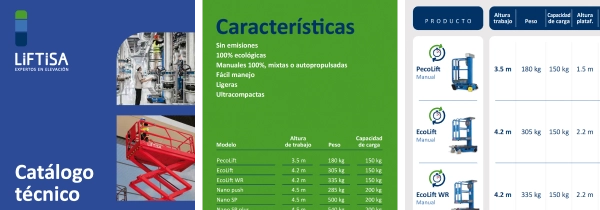
Download our catalog
You’ll be able to view all of our products and current offers, as well as the technical specifications and other services offered by LIFTISA so you have all the information you need for your project.