Low-height lifting platforms or scaffolding?


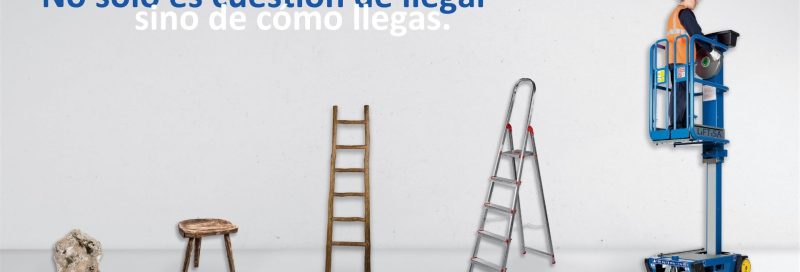
Prior to the introduction of mobile elevating personnel platforms (MEWPs) in the 1970s, professionals in the construction industry relied almost exclusively on ladders and scaffolding to access many of the jobs at height. In the decades since its introduction, the Low-height lifting platforms have become increasingly common, but one question still arises: Which is the better option, low-height lifting platforms or scaffolding?
MEWPs have a number of advantages compared to scaffolding systems. Improve security, access, and productivity.
Time and workload management
The time and resources allocated to a given project are a primary factor when deciding between a MEWP or a scaffold. In general, compared to scaffolding, low-height lifting platforms allow jobs to be carried out in the same or less time and with fewer workers.
Once unloaded on site, and inspected according to the operator’s manual, a low-rise lifting platform can be moved to the job site and start work immediately. Scaffolding must be manually transported to the job site after delivery at street level and may require coordination with a third party Operator specialized in the assembly and dismantling of scaffolding systems. Once the scaffolding is assembled, a worker must climb onto the desired work platform, carrying or lifting their materials and tools.
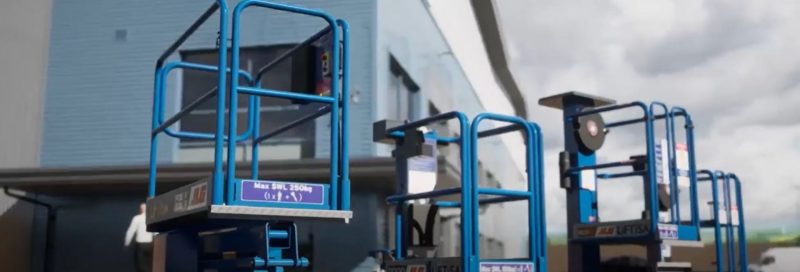
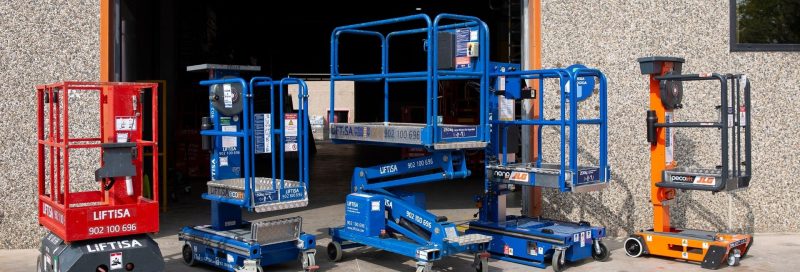
MEWPs, such as Liftisa’s manual (PECOLift and ECOLift) or mixed (NanoPush and Power Tower) baskets, offer baskets with a size designed to transport a worker, their tools and supplies to heights of up to 5 m in less than 12 seconds.

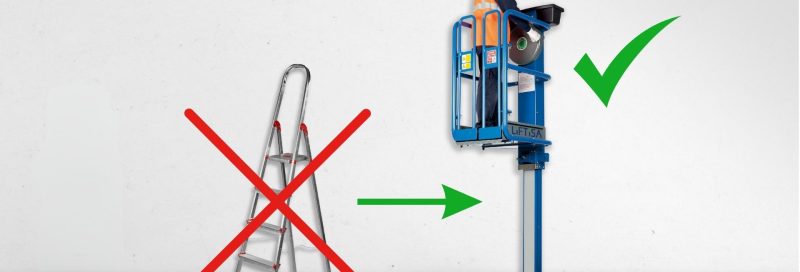
Workload management is crucial to reducing worker fatigue and improving productivity. Most scaffolding systems incorporate a ladder for worker access, which represents a Risk of falls and contributes significantly to worker fatigue. It is often not possible to locate a work platform at the desired height due to the standardized heights of the scaffolding sections. This causes the worker to have to bend or stretch to reach the work surface. Indoor work with mobile scaffolding doesn’t just require climbing and repositioning the scaffolding frequently. It also requires dismantling it to be able to move it from one enclosure to another and pass through doors.
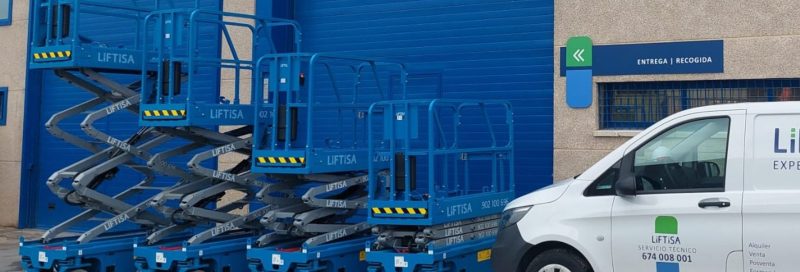
However, low-rise boom lifts allow the operator to enter the basket and, with proportional lift control, position the platform exactly where they need it, so they can minimise effort and fatigue associated with bending and stretching. Most mixed low-rise MEWPs can be displaced at maximum height. In this way, it allows the worker to continue with the next work surface without wasting time returning to the retracted position. In addition, they are capable of passing through standard doors, to Streamline work in indoor applications.
Access to the workplace
The access surface to a workplace can vary between concrete surfaces and uneven terrain; and there is a MEWP suitable for these and any other type of surface. One of the main advantages of low-rise lifting platforms are Compact dimensions, allowing quick and easy access to indoor locations with restricted dimensions.

Large scaffolding system installations often become a fixture on the construction site. This requires anchors to the structure to achieve lateral stability. On the other hand, lifting platforms are They are self-contained and designed with productivity in mind, allowing workers to position the chassis and basket exactly where desired.
This flexible positioning it is particularly beneficial in public or commercial spaces, where the workplace is limited to the footprint of the MEWP. The MEWP can be moved after work to another location, thus eliminating any interference with daily activity. However, with semi-permanent scaffolding installations, an entrance may have to be prohibited or obstructed. Even after the workday is over.
Safety at height
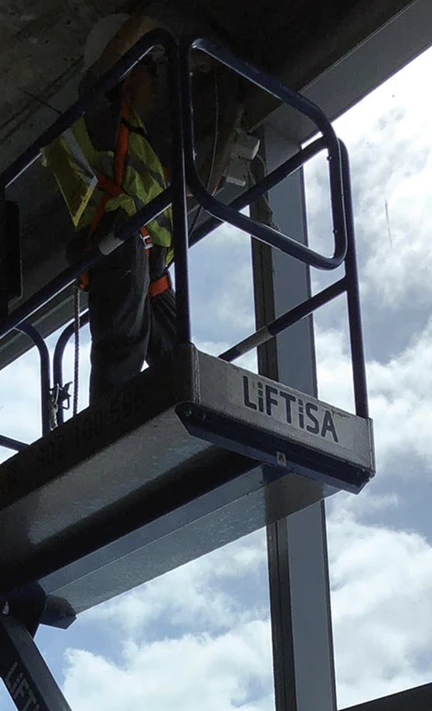
The risk of falls It is one of the four great dangers in construction sites. It is essential that the installation, inspection, operation and maintenance procedures established by the manufacturer of the MEWP or scaffold are respected by personnel. The patient must be properly trained, while at the same time being competent and qualified. MEWPs have Guardrail systems as a means of preventing falls that travel with the operator, tools and materials, all the way to the job site.

In addition, harness attachment points are available to allow MEWP occupants to be strapped in with a suitable fall arrest restraint system (as required), further ensuring that workers can complete their work in the safest manner.
At Liftisa we innovate in lifting platform solutions manual, mixed and self-propelled, to always offer the best option in working at height. We believe in the need to drive change to improve the safety, efficiency and productivity in working at low heights.
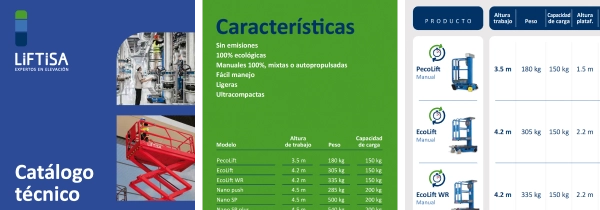
Download our catalog
You’ll be able to view all of our products and current offers, as well as the technical specifications and other services offered by LIFTISA so you have all the information you need for your project.