PPE, key safety accessories for work at height
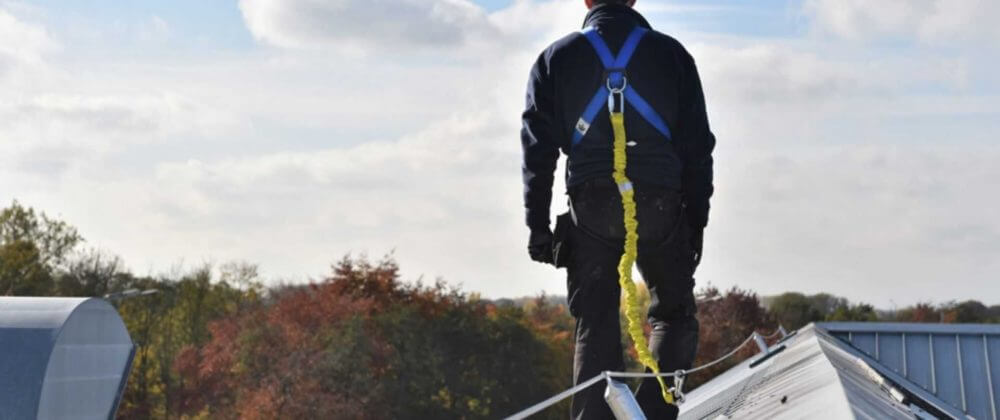
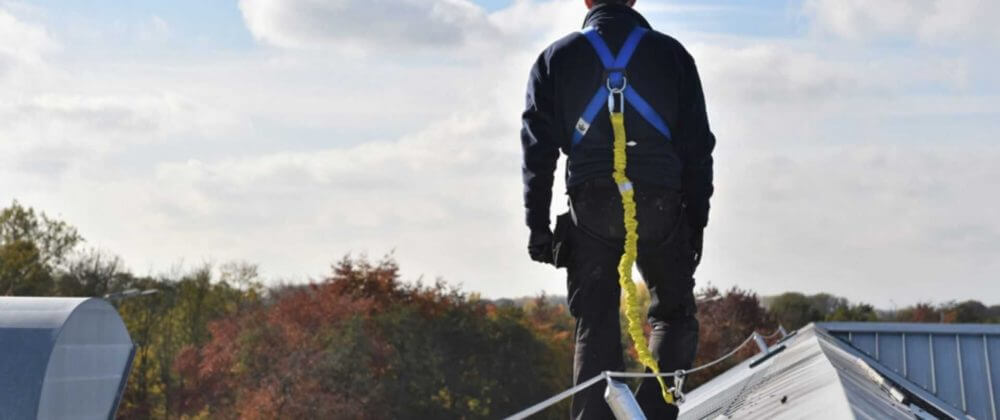
Safety in the workplace is one of the fundamental premises in the workplace. A job without appropriate safety measures for the Prevention of Occupational Risks can seriously harm our health.
In addition to all these safety measures that we explain below, it is very important that the operator has the necessary safety training on risks.
We are going to talk about all this, specifically PPE for work at height.
What are PPE key to the safety of work at height?
PPE is Personal Safety Protective Equipment, and protects workers from falls in the work they perform at heights. They support and slow down the body, preventing it from being left unprotected.
The most common cause of serious workplace accidents is undoubtedly falls from height. Nowadays there are many operators who are exposed to work at height on a daily basis, such as operators of vertical work or on roofs. It is for this reason that it is of utmost importance that PPE is used. In this way, we will be practically minimising 100% of the damage that the operator may suffer.
There are several types of security systems and each of them has a specific function.
Fall arrest systems
Fall arrest systems are the safety components that are used by the operator that guarantee their protection in situations with a risk of falling from height. The worker sees his body slowed down thanks to these systems, avoiding a possible fall, traveling the minimum possible distance and being suspended without suffering any damage.
A fall arrest system consists of a fall arrest harness, a connection subsystem and an anchoring device, all of which are designed to arrest a fall.
Fall arrest safety harnesses
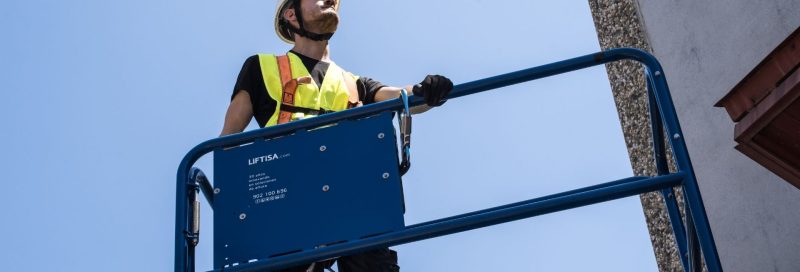
A fall arrest harness is a safety device. It fits over an operator’s body and stops him in the event of a fall. That’s what it’s designed for.
It basically consists of a system of straps designed to support the operator’s body in the event of a fall. They also consist of hooking and adjustment elements, thus tying the anchor line.
Types of fall arrest safety harnesses
It is very important that the right harness is chosen for each job at height, and thus be able to work in complete safety. There are currently many types of safety harnesses that must be used to ensure the safety and health of the worker.
Restraint and restraint belts (EN 354, EN 358):
Grasping devices surround the worker’s body at the waist. They have a dual function: to prevent the operator from reaching a place with a risk of falling and to keep the operator in position on the jobsite.
Seat harnesses (EN 354, EN 358, EN 12841C):
Safety component consisting of a belt with a hook point and two supports, which surround each leg. In this way , the body of the conscious operator is supported in a sitting position. These systems have the same functions as seat belts.
Fall arrest harnesses (EN 360, EN 355, EN 353.1/2):
A fall arrest harness is, of all, the most used component of a fall arrest system. The main function of this system is to stop a fall.
These body gripping devices have to incorporate a hooking point so that they can guarantee the connection of the fall arrest subsystem and the safety of the operator. There are different types: dorsal latch, sternal latch, ventral latch and positioning latch.
Integral harnesses (EN 354, EN 358, EN 12841 A/B/C, EN 360, EN 355, EN 353.1/2):
These integral harnesses are safety equipment widely used in vertical work. They consist of the union of a seat belt, a fall arrest harness and a seat harness.
Connection subsystems
The fall arrest connection components connect the anchor point to the safety harness. There are two types of subsystems:
Energy absorbers (EN 355)
They are the equipment of a fall arrest system, which They guarantee stopping in the event of a fall from height. They absorb some of the energy . They are made up of a sewn and protected strap that unravels when falling.
For the use of an energy absorber, the length of the absorber must be taken into account and thus avoid impacting the ground in the event of a fall from height.
Fall arrest devices
They are the components that join the operator and an anchor point. They are responsible for preventing the operators from falling from height. They can be classified into two types:
Retractable fall arrest devices
They are those with an automatic locking function and an automatic tension system as well, in the form of a cable, band or rope. The system itself can also incorporate an energy dissipation system.
Sliding fall arrest devices
These are devices with an automatic locking function and a guide element, which can be rigid or flexible. Thanks to its vertical and anchored guide, the device can be moved along the anchor line and thus allows the operator to change position during the work he is doing at height.
You can also incorporate an energy dissipation system in the sliding fall arrest device or in its anchor line.
Anchor Points
An anchorage device is a system where the safety harness connection subsystem is engaged. The entire security system must be anchored to a safety point, as we already know.
We can divide them into:
- Fixed anchor points.
- Permanent anchor points.
- Unique anchor points
- Lifelines or anchor lines
The most common are single anchors and lifelines, also called anchor lines.
Unique anchor points
They are unique safety anchoring elements. We can anchor any security element in them. These anchor points do not allow much mobility for the worker.
Lifelines or anchorage
They are the most commonly used personal fall protection equipment. Most locations can be installed. They offer greater mobility to the worker thanks to the possibility of moving along the line.
- Vertical lifelines: Allow vertical movement
- Horizontal lifelines: Anchoring elements to be placed in a horizontal plane
These are all the most important and widely used protective equipment for work at height.
Download our catalog
You’ll be able to view all of our products and current offers, as well as the technical specifications and other services offered by LIFTISA so you have all the information you need for your project.